
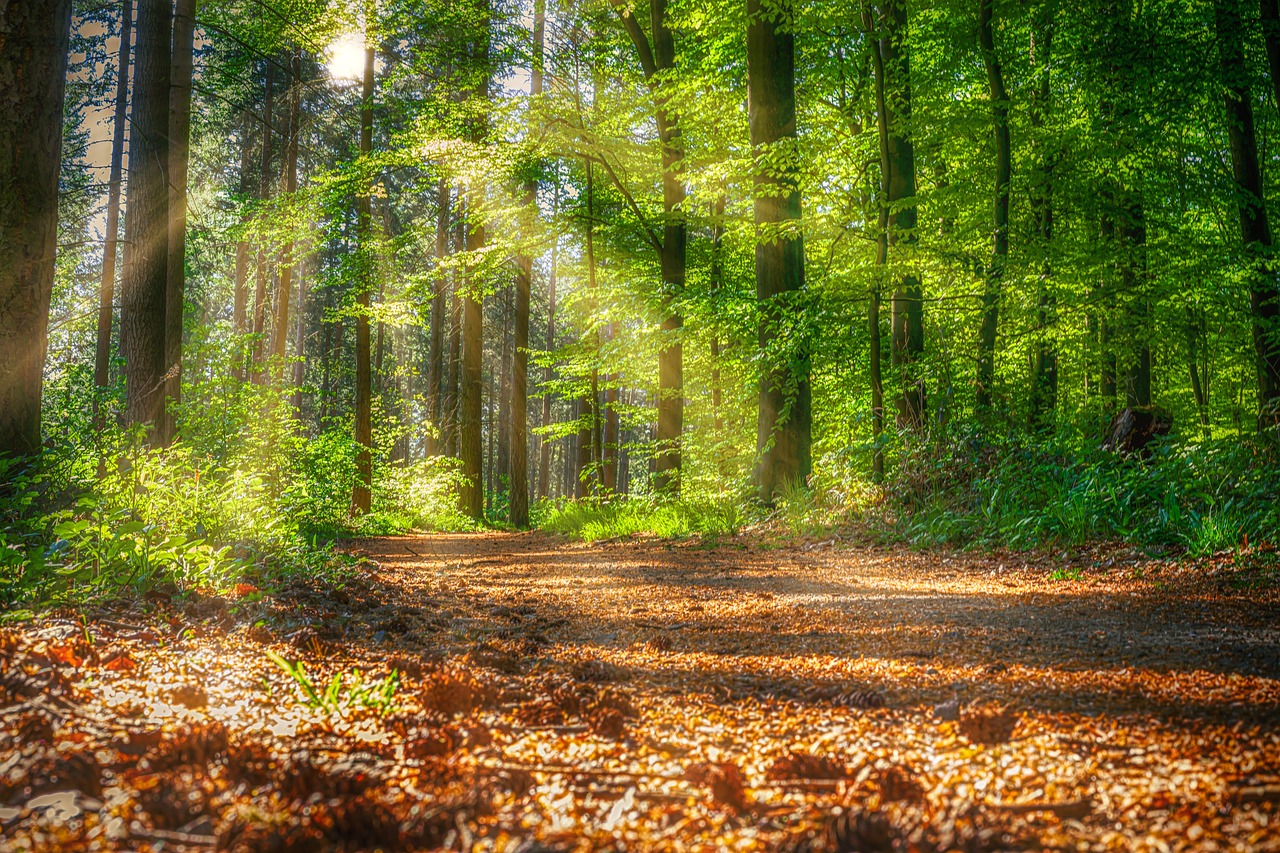
If you’re looking for a hike that takes you on a path less traveled, the Nith River Forest Hiking Experience with Grand Experiences is one for your bucket list. Winding hidden through parts of rural fields and woodlots even the locals aren’t well aware of, the Nith has its beginnings north of Crosshill, (northwest of Kitchener,) and makes its way into Oxford and Brant counties before flowing into the Grand River at Paris. It’s also a river of duality, raging during spring melt and fall rains, and slowly meandering at a low level in summer. At a woodlot access point near Canning is where our guide, Jamie Kent, began this unique immersive interpretive forest experience.
With the ability to give you volumes of local detail coloured with a bit of humour, Kent and his experienced guides teach their guests details they wouldn’t have otherwise known about the old-growth section they’re hiking through. The Grand Experiences trip description identifies it’s an “…authentic explorer’s experience,” and as we began the hike and entered the more natural areas along this river, he told us local stories and legends resulting from the hidden nature of this tributary of the Grand.

Our trail was a small loop in Oxford County which took us past the Hobie’s Hollow bridge, one of the few old iron bridges still crossing the Nith. Here, Kent and his guides offered up some historic details tied to the area, and while the crossing is now closed, the details of this access over the river were intriguing, nonetheless. It was here where we were introduced to a forest filled with a towering canopy high overhead. The trail was first lined in parts by old pine for a brief span, and every so often a concrete marker placed at what seemed like a former property line would appear through the overgrown trees, grass and vines. We were also introduced to a former pioneer cabin foundation in these parts, with a small discussion around what this part of Oxford County may have looked like at the time, access to the property, means of transportation, and families that settled in the area. When we moved on, it almost seemed like we stepped back in time, walking into a hidden valley of sorts that opened up fresh and green with maple trees, dotted with oak, butternut, and only occasionally the odd white pine.
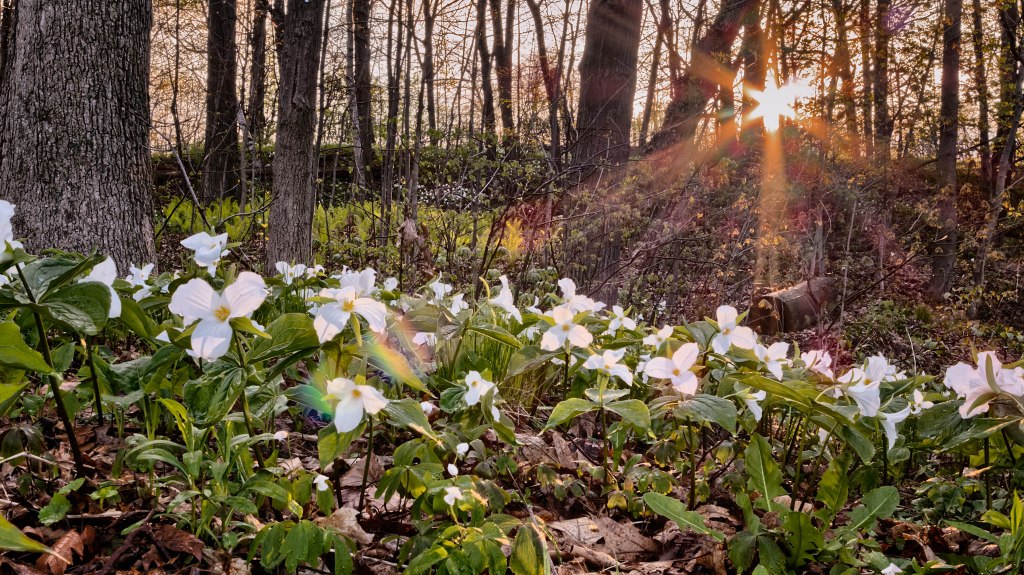
Among this section of rare Carolinian Forest were the remaining blooms of the spring trilliums, speckled with the odd purple blossom appearing amid them. Here we learned about the colouring of the rare bloom among what seemed like thousands of beautiful white ones, and how the plant was a dining favourite of the local white tailed deer population. In addition to being the official flower of the province of Ontario, a species that is protected and should not be picked, its history of remedial and curative properties recognized by the local Indigenous populations were also shared with us on our hike.

Further on into nearly untouched natural forest beauty, the tree coverage grew thicker overhead. The Grand Experience team guided our path through 2 forks in the trail at this section, sharing folklore of early settlement as we hiked past a forest floor covered in mayapple plants. They explained the toxicity of the plant pieces, with the exception of the actual fruit when it matures, and noted it too was a plant which was formerly used by Indigenous people for medicinal purposes. I had never seen or heard of it before, so it was nice to come away from this experience having learned something new.

Beyond this we passed through an extensive amount of ostrich fern, which to my hiking partners meant a bounty of fiddleheads would be available the following spring – a seasonal treat in our neck of the woods. First boiled, then sautéed in butter, with some garlic, salt, and pepper, they’ve been a part of Indigenous diets dating back at least 3 centuries!
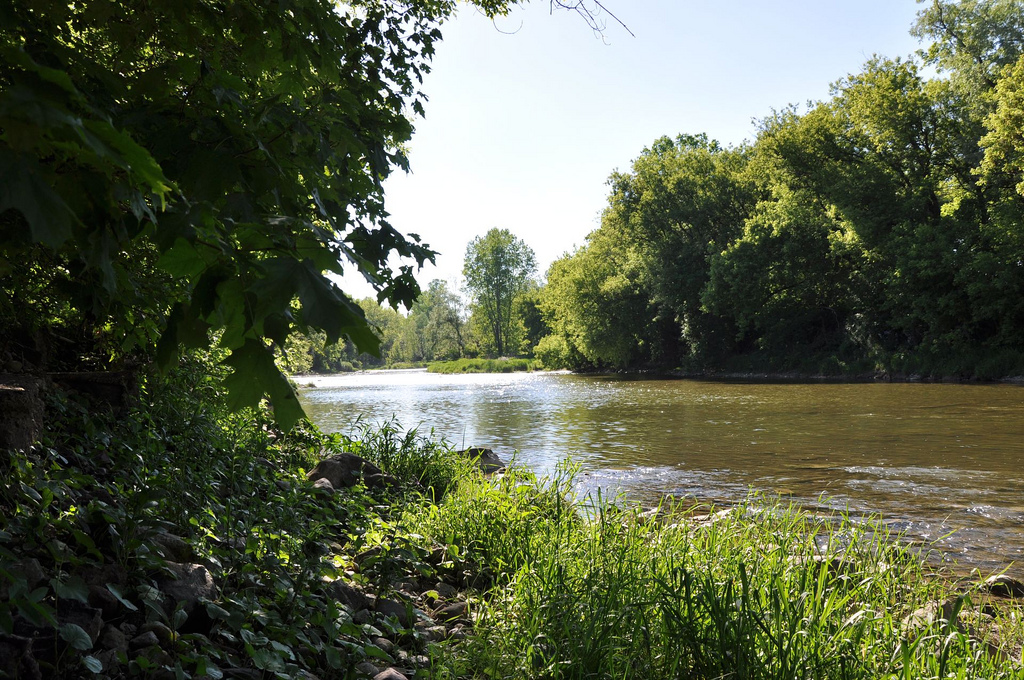
Shortly after finding this treasure of future edible delicacies, we came upon the Nith riverbank where our guides gave us a brief history of this heritage river tributary and the amazing beauty in nature that surrounds it. The water looked stunningly clear and calm in this section; very picturesque. In the full immersive interpretative forest experience, this locale is used for talks around animal tracking, habitat exploration, and the setup of a model historic trapper’s lean-to for a campfire lunch of maple chili! However, in our introduction to the Nith River forest, our hike looped back to continue our discussion about the authentic explorer’s experience that Grand Experiences guides provide on this unique offering and how, no matter the time of year, its amazing for everyone included.
 Uncommonly Grand